


We are committed to protecting your personal data and providing you with access to your personal data in accordance with the personal data protection laws in force in the European Union.
By clicking "Accept All", you are giving us permission to place cookies to enhance your experience on this website, to help us analyze site performance and usage, and to allow us to deliver relevant marketing content. You can manage your cookie settings below. By clicking "Confirm" you agree to the current settings.
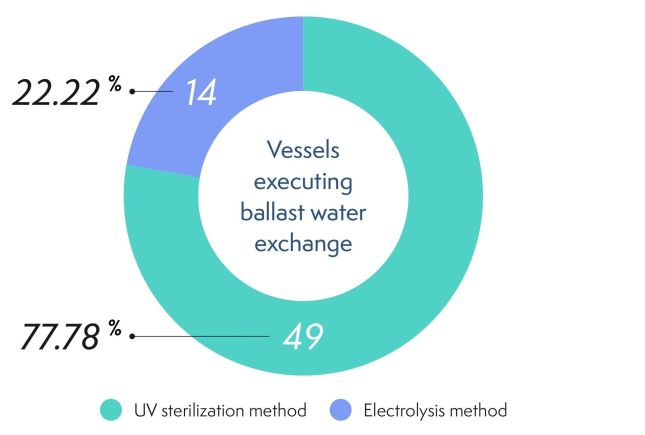
"Ballast water" is pumped in from the sea to maintain vessels' stability and balance. However, as the ballast water may carry local aquatic organisms, the “Ballast Water Treatment System” has been installed on our vessels to eliminate invasive aquatic organisms and pathogens species contained in the ballast water in order to avoid harming the marine environment and ecological balance. Yang Ming complies with the International Convention for the Control and Management of Ships' Ballast Water and Sediments (BWM), installing ballast water treatment equipment on vessels and completing new Ballast Water Management Plan (BWMP) submissions and delivery to vessels. All ballast water management is subject to Port State Control (PSC) inspections and meets port state requirements.
Achievements
🌟 There were no major leakage incidents in 2025
✅ By the end of 2025, 63 owned ships have 100% completed ballast water system installation.
✅ By the end of 2025, owned ships have completed new Ballast Water Management Plan (BWMP) submissions.
📝 All ballast water management is subject to PSC inspections and meets port state requirements.
BIODIVERSITY
The research project titled “Research and Discussion on the Ballast Water Treatment Methods Applicable to Cargo Ships” was commissioned by Yang Ming and National Taiwan Ocean University to the “YM-NTOU Framework – Yang Ming Think Tank” in 2022 to analyze the cost-effectiveness and biological treatment effect of chemical agents in treating vessel ballast water. Through such research plans, the ballast water treatment mechanism for the Company’s vessels is reviewed in a strict and responsible manner. We also continue to look for more appropriate ways to reduce the impact of ballast water on marine ecology.
Flighted Spongy Moth Complex Regulations
The Company's fleet complies with announcements jointly issued by the U.S. Department of Agriculture (USDA), Animal and Plant Health Inspection Service (APHIS), and Canadian Food Inspection Agency (CFIA) regarding harmful Flighted Spongy Moth Complex (FSMC), taking relevant measures for vessels calling at FSMC regulated areas during specific risk periods:
- Vessels undergo inspection and FSMC-free certification by approved certification institutions.
- Vessels must arrive at North American ports without FSMC; if FSMC is discovered upon arrival, port authorities require departure for cleaning and vessels must completely clear FSMC before reapplying for port entry to reduce potential risks of FSMC entering North America. To avoid vessel delays, shipping companies must conduct intensive vessel self-inspections before arrival to find, remove (scrape off) FSMC and properly handle or destroy all egg masses and FSMC in any state before entering U.S. and Canadian ports.
- Vessels must provide a two-year port call list to their Canadian or U.S. agents at least 96 hours before arriving at North American ports.
Plan for Vessel Speed Reduction to Protect Blue Whales
From May to November annually, to avoid vessel collisions with endangered large marine creatures such as blue whales, humpback whales, and fin whales in Southern California and San Francisco Bay waters, allowing whales to safely migrate to these waters for feeding, the Company has continuously responded since 2016 to the "Protecting Blue Whales & Blue Skies" Program led by the National Oceanic and Atmospheric Administration (NOAA), with the fleet voluntarily reducing speed to below 10 knots and receiving the highest honor Sapphire Award for two consecutive years.
Protecting Blue Whales and Blue Skies (BWBS) is a voluntary Vessel Speed Reduction (VSR) verification and recognition program. Shipping participants help reduce ship strike risk to endangered whales, underwater noise, regional greenhouse gas emissions, and air pollution by voluntarily transiting at 10 knots or less in the VSR zones and season timeframe set by NOAA. BWBS independently verifies participants' cooperation rates, quantifies the environmental benefits of participation, and provides recognition to encourage further adoption of responsible shipping practices that help support and protect marine biodiversity, air quality, and coastal communities.
(More information: Protecting Blue Whales and Blue Skies Program)
Great Barrier Reef Protection
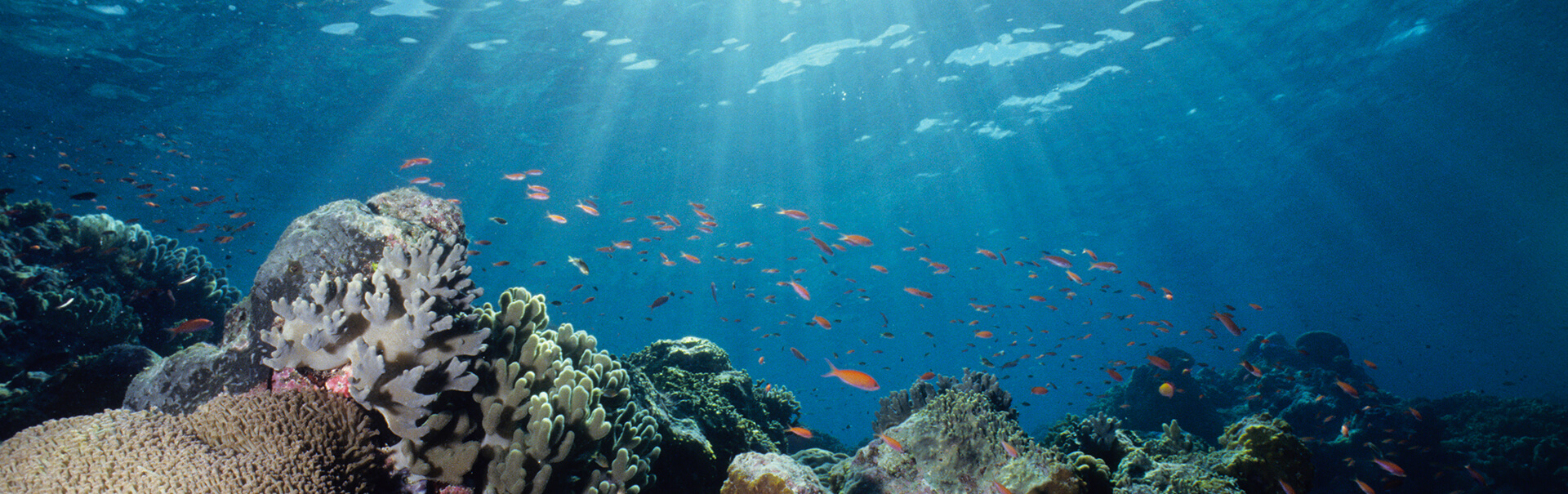
The Company regularly calls at Sydney, Melbourne, and Brisbane ports in Australia. During voyages from Asian ports to the aforementioned ports, vessels consistently use low-sulfur oil with sulfur content below 0.5%, navigating in the Particularly Sensitive Sea Area (PSSA) waters east of the Great Barrier Reef according to Weathernews Inc. recommendations, without sailing in the Great Barrier Reef core waters, to protect coral reefs and demonstrate the Company's dedication and determination to protect marine ecological environments.
Preventing Vessel and Container Surface Chemical Pollution of Oceans
The bamboo flooring of the Company’s containers must meet Yang Ming’s testing requirements. Before assembly, the flooring undergoes permanent preservative treatments according to the container quarantine and inspection procedures of the Australian Federal Departments of Health and Transport and in accordance with the Australian Quarantine and Inspection Service’s requirements. After container use, each handover inspection must comply with The Institute of International Container Lessors (IICL) regulations, completing cleaning without leaving organic substances to avoid affecting marine water quality. Additionally, considering that heavy metal accumulation in marine life potentially affects human health, Yang Ming’s vessels use new tin-free marine paints for ship hulls to avoid marine pollution.
Coral Restoration Program
The Company's coral restoration program in cooperation with the National Museum of Marine Science & Technology launched in March 2023, establishing two breeding tank hardware facilities at the National Museum of Marine Science & Technology Tide Pool Marine Center, with Company employees participating in tank maintenance as one-day volunteers. As of 2024, 16 species totaling approximately 1,064 coral seedlings have been cultivated, with the earliest cultivated coral seedlings having grown to one and a half times their original size.
These practical actions not only enhance biological habitats, foster marine biodiversity resilience, and promote nearshore marine biological resource recovery, achieving biodiversity protection and climate change mitigation effects. Since coral cultivation activities began, over 100,000 visitors have visited, showcasing the beauty of coral ecological environments to the public through Yang Ming’s breeding tanks, implementing the Company's " Protecting Biodiversity and Zero Net Deforestation Commitment" and continuously promoting environmental sustainability awareness.
Prohibition of Shark Fin and Illegal Wildlife Transportation
Yang Ming joined the global shark fin ban commitment in 2015 to protect natural resources. Shark fin is a controversial commodity whose trade activities cause serious damage to marine ecosystems and shark populations. We are well aware that sharks, as an important part of the marine ecosystem, are crucial to maintaining the ecological balance of the ocean. Therefore, Yang Ming prohibits transportation of cargo with "Shark Fin" commodity names, incorporates this into booking system controls, actively participates in global shark fin trade prohibition actions, and requires global agencies to comply with this regulation, working together to achieve global shark fin trade prohibition goals. Starting in 2024, the Company declared the "Biodiversity and Zero Net Deforestation Commitment," following species protected by the Convention on International Trade in Endangered Species of Wild Fauna and Flora (CITES) and listing them as prohibited booking items, implementing the Company's emphasis on combating illegal wildlife smuggling, promoting species conservation and maintaining sustainable development.