







We are committed to protecting your personal data and providing you with access to your personal data in accordance with the personal data protection laws in force in the European Union.
By clicking "Accept All", you are giving us permission to place cookies to enhance your experience on this website, to help us analyze site performance and usage, and to allow us to deliver relevant marketing content. You can manage your cookie settings below. By clicking "Confirm" you agree to the current settings.
Environmental and Smart Ships
Yang Ming upholds the core value of achieving environmental sustainability through energy saving and emissions reduction. We were the first ISM-certified carrier in Taiwan in 1996 and implemented the ISO 14001 environmental management systems in 2004. Through a series of environmental protection measures, the Company has been dedicated to protecting marine ecology, reducing carbon emissions, and air pollution in an effort to ensure a better environment for future generations.
By carrying out fleet renewal, deploying new eco-friendly vessels, optimizing ship sailing attitudes, adjusting cargo ballasting and ensuring energy-efficient draft operation based on stowage planning practices, working with WNI using big data cloud technologies, and other intelligent technologies to enhance operational efficiency through monitoring by the Smart Ship Center, reinforcing fleet carbon reduction management, monitoring the energy consumption performance of vessels, refining the existing vessels for better energy efficiency, the carbon intensity of the Company’s operating vessels in 2024 was 37.03 g/teu-km, reduced by up to 62.74% compared to 2008, exceeding the target of the IMO. The fleet not also uses shore power to reduce air pollution, but also conducts wastewater discharge control and lowers ship speed to maintain local marine ecology.

GREEN VESSEL
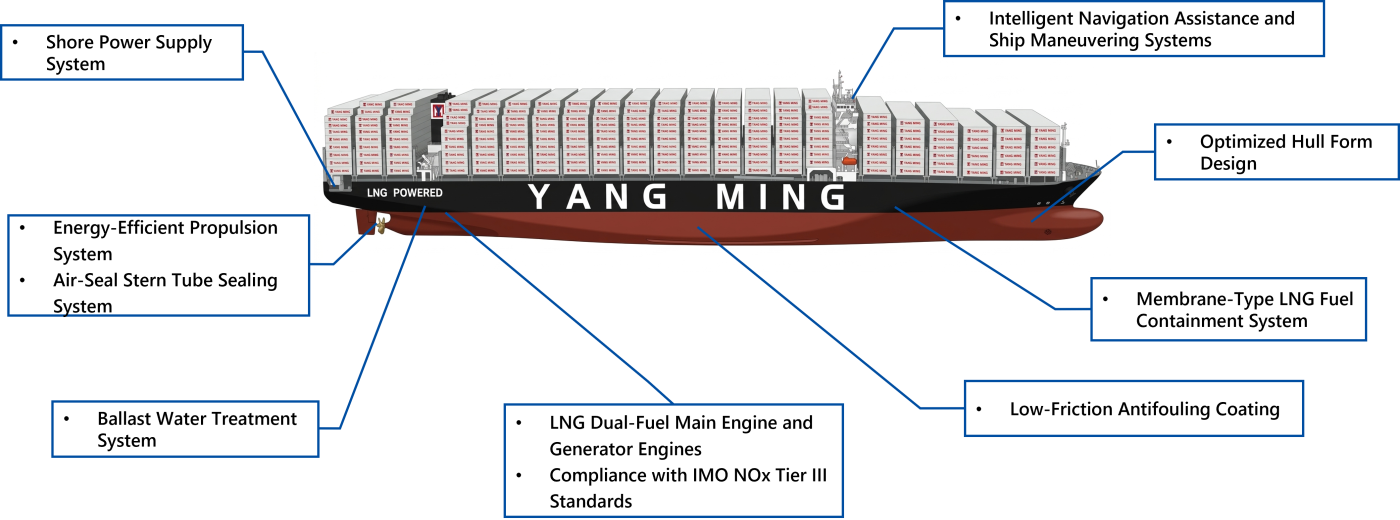
Yang Ming Marine Transport's new generation of 15,500-TEU-class LNG dual-fuel container vessels was built by HD Hyundai Heavy Industries. Each vessel measures 364.97 meters in length and 51 meters in breadth, with a carrying capacity of approximately 15,600 TEU. Equipped with a high-pressure dual-fuel main engine capable of operating on LNG or low-sulphur fuel oil. Additional technologies—including exhaust emission control, onshore power supply, energy-efficient propulsion, ballast water treatment, air-seal stern tube sealing, and intelligent navigation and monitoring systems—support operational efficiency and navigational safety while reducing impacts on air quality, the climate, and the marine environment.
Environmental Class Notations
• ABS:ENVIRO、BWT、IHM、GFS(DFD)、NOx-Tier III
• BV:CLEANSHIP、BWT、GREEN PASSPORT EU、Tier III、LNGfuel dualfuel
• CR:POT、PP、BWM、EEDI、SEEMP、SRE、SRE-RU、SCR(GE)、EGR(ME)
• DNV:CLEAN、BWM(E,s)、ECA(SOx-A)、Recyclable、Gas fuelled LNG、Shore power、ER(EGR,SCR,TIER III)
• LR:ECO(TOC)、BWTS、IHM-EU+、EGCN(SCR,EGR)、LFPF(GF,NG)、OPS
| Feature | Description |
|---|---|
| 1. Optimized Hull Form Design | Optimized hull lines and hydrodynamic performance reduce resistance and improve energy efficiency. |
| 2. Intelligent Navigation Assistance and Ship Maneuvering Systems | Integrated radar, AIS, and electronic chart information help identify collision risks, improving navigational safety and maneuvering efficiency. |
| 3. Membrane-Type LNG Fuel Containment System | Cryogenic storage and high-performance insulation help limit LNG boil-off and improve fuel storage and utilization efficiency. |
| 4. Advanced Low-Friction Antifouling Coating | Reduces marine biofouling and hull frictional resistance, helping cut fuel consumption while protecting the marine environment. |
| 5. LNG Dual-Fuel Main Engine and Generator Engines | The vessels are equipped with LNG dual-fuel propulsion systems, helping reduce greenhouse gas and air pollutant emissions in support of lower-carbon shipping. |
| 6. Compliance with IMO NOx Tier III Standards | Exhaust emission control systems on the main and generator engines reduce nitrogen oxides (NOx), helping improve air quality in ports and coastal areas. |
| 7. Ballast Water Treatment System | Treats aquatic organisms in ballast water to reduce the risk of transferring invasive species between marine ecosystems. |
| 8. Alternative Maritime Power System (AMP) | Allows vessels to use shore-supplied electricity while berthed, reducing onboard generator operation and emissions in port. |
| 9. Energy-Efficient Propulsion System | Combines an efficient propeller, energy-saving rudder, and pre-swirl stator to improve stern flow and reduce propulsion energy losses. |
| 10. Air-Seal Stern Tube Sealing System | Uses an air barrier to separate seawater from stern tube lubricating oil, reducing oil leakage and the risk of marine pollution. |

SMART SHIPS MANAGEMENT
Yang Ming's 15,500 TEU LNG dual-fuel container vessels incorporate intelligent navigation assistance, vessel performance monitoring, and ship-to-shore data integration technologies. The vessels have obtained relevant smart ship class notations from ABS, BV, CR, DNV, and LR, covering energy efficiency, route optimization, equipment monitoring, and data management to enhance navigational safety and fleet operational efficiency.

Weather Information Integration
Weather forecast software is integrated to the SSC, enabling a preemptive recognition of weather hazards for fleet to adjust routes and reduce risks.

Fleet Management Platform
The fleet management platform is established by our own to integrate various information in the future for an effective management of vessels to increase operational resilience.

Ship Audit APP Platform
The audit cycle is integrated. From audit arrangement, date transmission and vessels boarding audit to completion of audit, these are all recorded systematically, enabling tracking of improvement plan and corrections anytime.

Cross-platform Integration
Information is integrated across platforms, with the crew supervision management system and more introduced, to gain relevant knowledge of ship operation and strengthen the ship management.

Date Warning System
Various safety indicators of ships are monitored in real time to enhance the safety of ships.

Real-time Status
Crucial information and ship status are displayed together in real-time to assist seafarers to make the right decisions timely.
High-Pressure LNG Dual-Fuel Main Engine
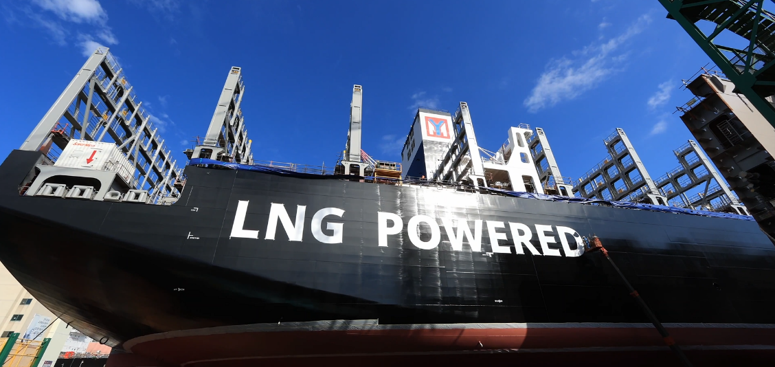
The main engine can operate on LNG or low-sulphur fuel oil, with LNG intended as the primary fuel after delivery. Compared with conventional fuel oil, LNG can help reduce carbon dioxide (CO₂), sulphur oxides (SOx), nitrogen oxides (NOx), and particulate matter emissions, depending on the operating and emissions-control conditions. This provides a foundation for the fleet’s transition towards alternative fuels and lower-carbon operations.
GTT Mark III Flex Membrane-Type LNG Fuel Containment System
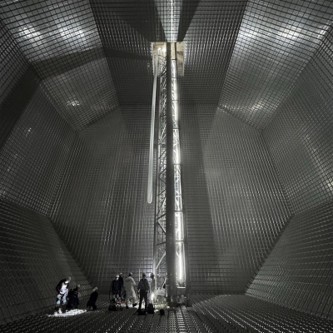
The vessel is specified with approximately 12,700 m³ of LNG fuel storage capacity and a GTT Mark III Flex membrane containment system. Its cryogenic membranes and high-performance insulation enable stable LNG storage. The fuel gas supply system (FGSS) manages fuel delivery and boil-off gas (BOG). The membrane design makes efficient use of the available hull space, while the insulation limits heat ingress and LNG boil-off, supporting fuel storage and utilization efficiency.
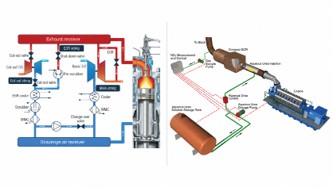
IMO NOx Tier III Exhaust Emission Control
The main engine and generator engines are fitted with exhaust emission control systems to reduce nitrogen oxides (NOx) and meet the applicable IMO NOx Tier III requirements, helping reduce impacts on air quality in coastal areas and ports.

Shore-Based Fleet Monitoring and Operational Management System
Vessel navigation data, weather information, main engine and generator operating conditions, energy consumption, and other performance indicators are integrated into a shore-based platform. This enables shore-based personnel to monitor fleet operations and supports vessel performance monitoring, energy management, and operational decision-making.
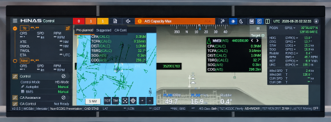
Onboard Intelligent Navigation Assistance and Ship Manoeuvring Systems
The systems integrate real-time data such as heading, speed, AIS, radar, and weather information to support collision-risk identification, situational awareness, and voyage optimization. They assist crews in improving navigational safety and ship manoeuvring efficiency.
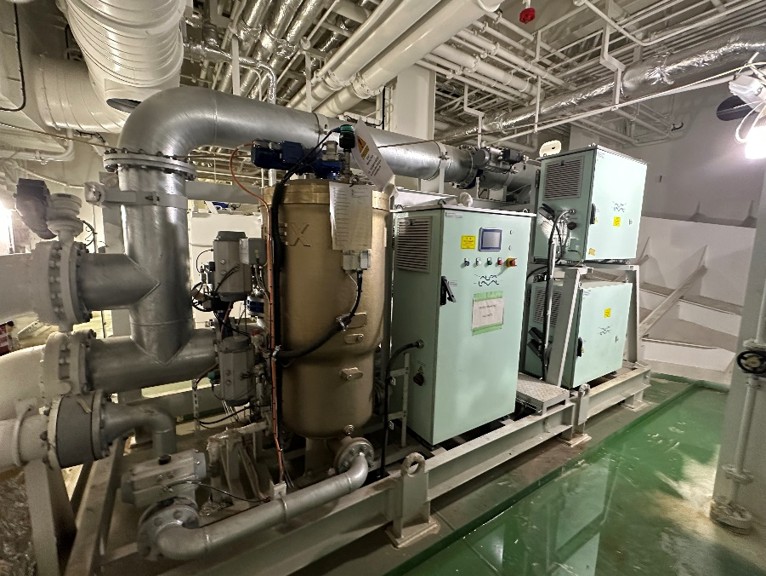
Ballast Water Treatment System
The ballast water treatment system reduces the survival and transfer of microorganisms and aquatic organisms between regions, helping prevent the spread of invasive aquatic species and protect the balance of marine ecosystems.
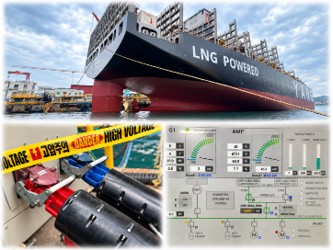
Alternative Maritime Power System (AMP)
When berthed at a suitably equipped port, the vessels can connect to an onshore power supply, reducing the need to operate onboard generator engines. This can lower fuel consumption, exhaust emissions, and local air pollution during port stays and support cleaner port operations.
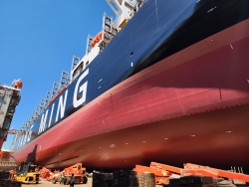
Advanced Low-Friction Antifouling Coating
The vessels use an ultra-low-friction antifouling coating featuring a specialized hydrolysis-based resin technology and an effective antifouling formulation. The coating helps limit marine biofouling and reduce hull frictional resistance, maintaining hull smoothness and propulsion efficiency while lowering fuel use and operational emissions. It is formulated without tributyltin (TBT) or cuprous oxide, supporting both energy efficiency and marine environmental protection.

Energy-Efficient Propulsion System
The propulsion arrangement integrates a high-efficiency propeller, twisted rudder, rudder bulb, and pre-swirl stator. Together, these energy-saving devices optimize flow around the stern and reduce propulsion energy losses, improving overall propulsive efficiency and helping lower fuel consumption and ship emissions.

Air-Seal Stern Tube Sealing System
An air-seal arrangement separates seawater from stern tube lubricating oil, reducing the risks of seawater ingress and lubricant leakage. It helps maintain reliable propulsion-system operation while reducing the risk of oil pollution in the marine environment.