


We are committed to protecting your personal data and providing you with access to your personal data in accordance with the personal data protection laws in force in the European Union.
By clicking "Accept All", you are giving us permission to place cookies to enhance your experience on this website, to help us analyze site performance and usage, and to allow us to deliver relevant marketing content. You can manage your cookie settings below. By clicking "Confirm" you agree to the current settings.
Talent Recruitment and Cultivation
Talent Recruitment
Talent Management Policy
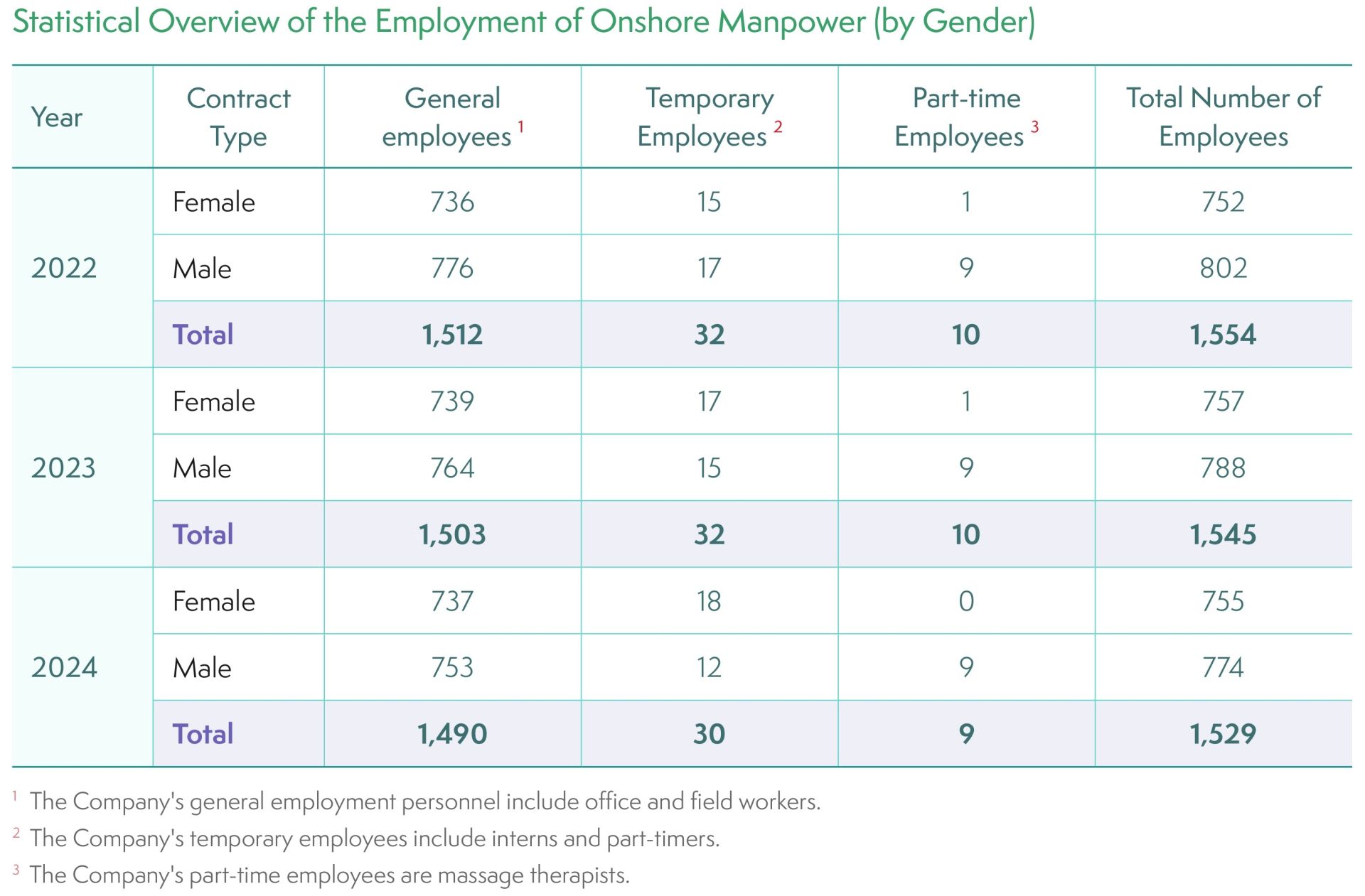
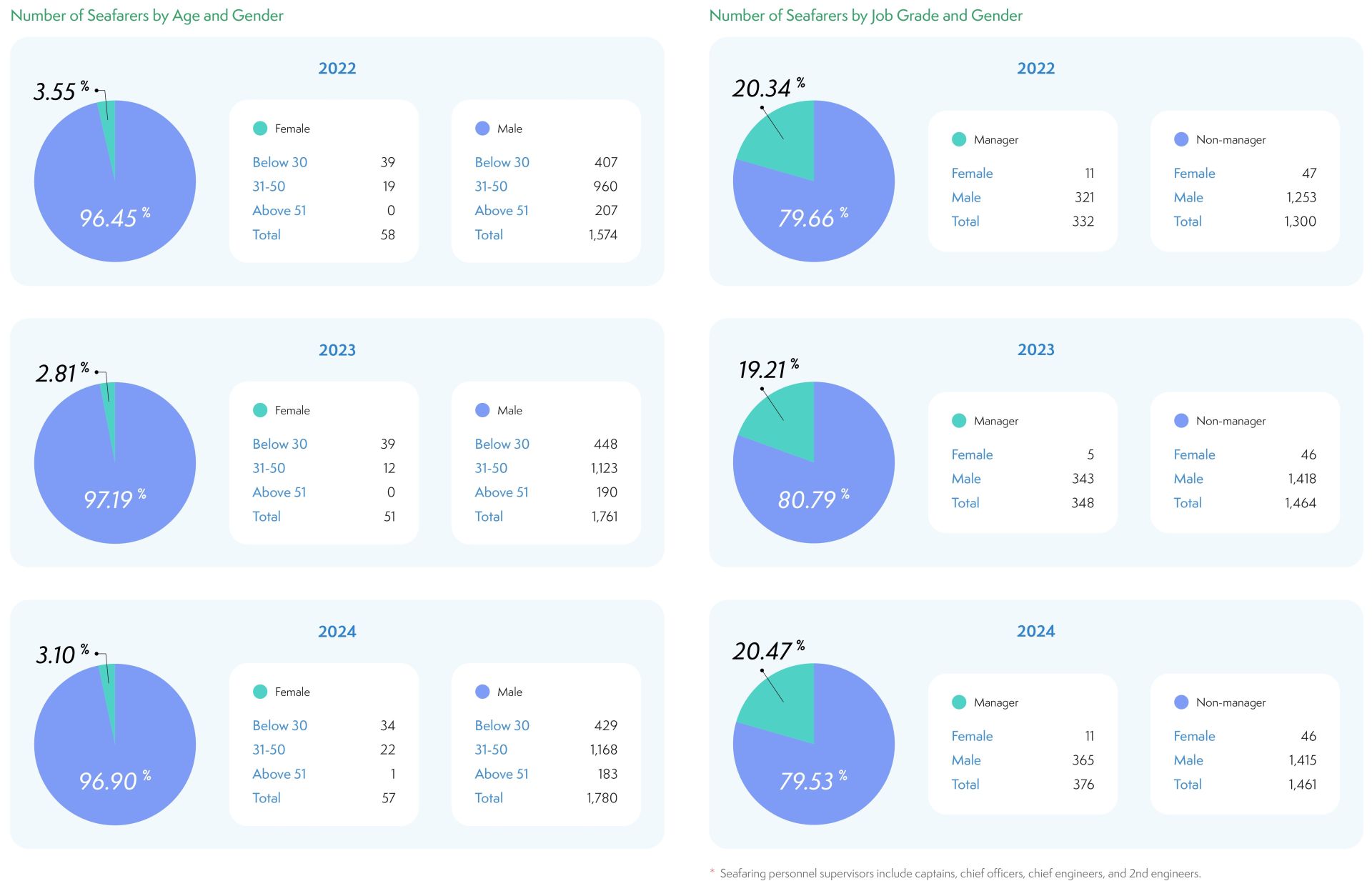
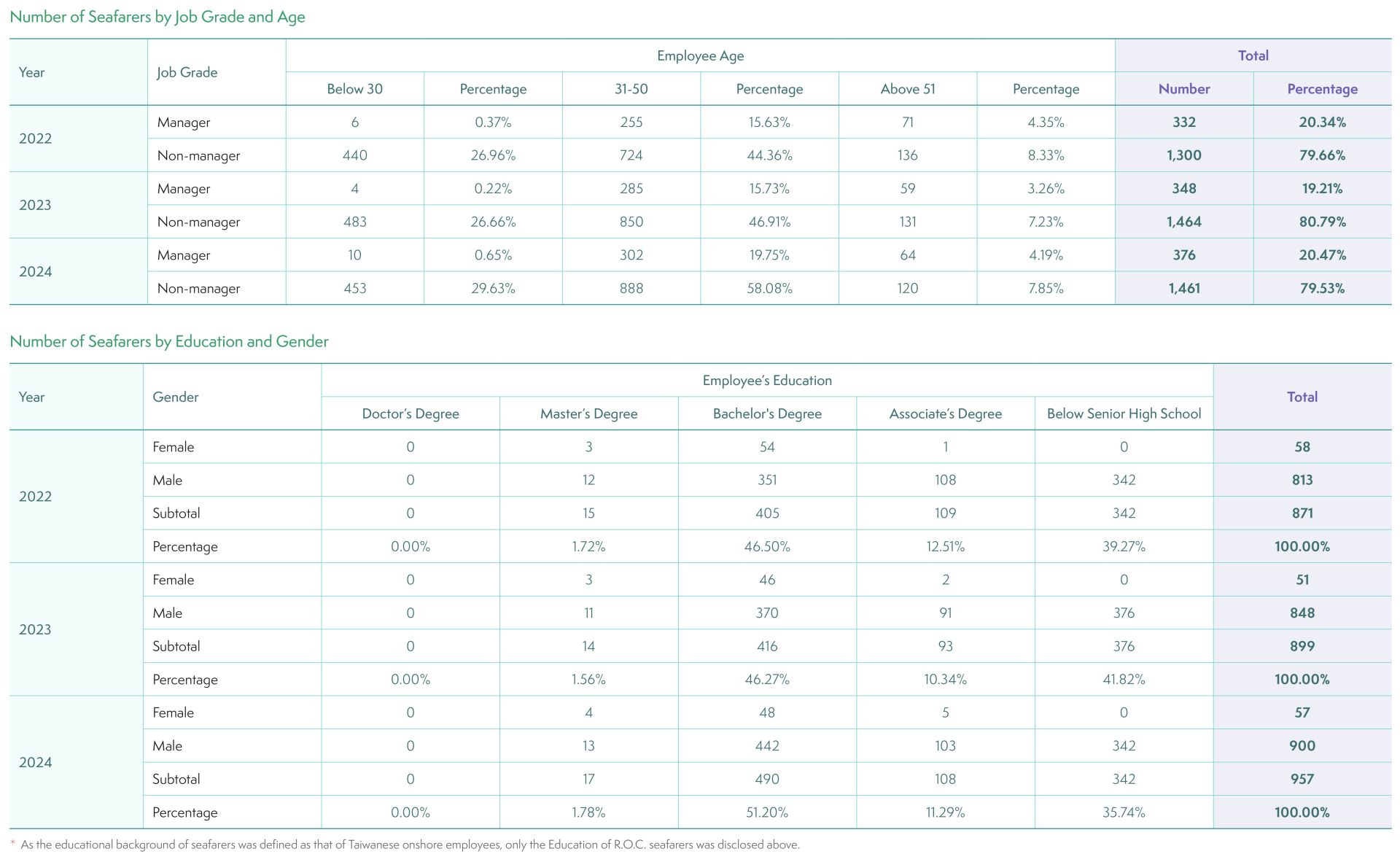
Yang Ming is committed to creating an open, inclusive, and diverse workplace environment and formulates talent recruitment strategies according to the company's short, medium, and long-term plans to attract outstanding talent to join the team. We firmly believe that "Outstanding staff facilitate a progressive Yang Ming." Making the most of talent and improving unit productivity are the driving forces for the Company's progress and development. We use Yang Ming Group's global resources and experience to cultivate talent with macro international perspectives, give our team a strong sense of mission, thereby improving overall performance and competitiveness. The Company insists on the meticulous operation of various management mechanisms, continuously improves the Company’s workforce, and strengthens core competitiveness to maintain excellence in the long term. Additionally, fleet safety and operational efficiency are closely related to seafaring personnel capabilities, being the most important aspect of fleet operations. Therefore, the Company continues recruiting talent interested in seafaring work and provides good career development opportunities to ensure comprehensive talent development and improve fleet operational standards.
Total Number of Employees(Including Contractd Employees)
| 2022 | 2023 | 2024 | |
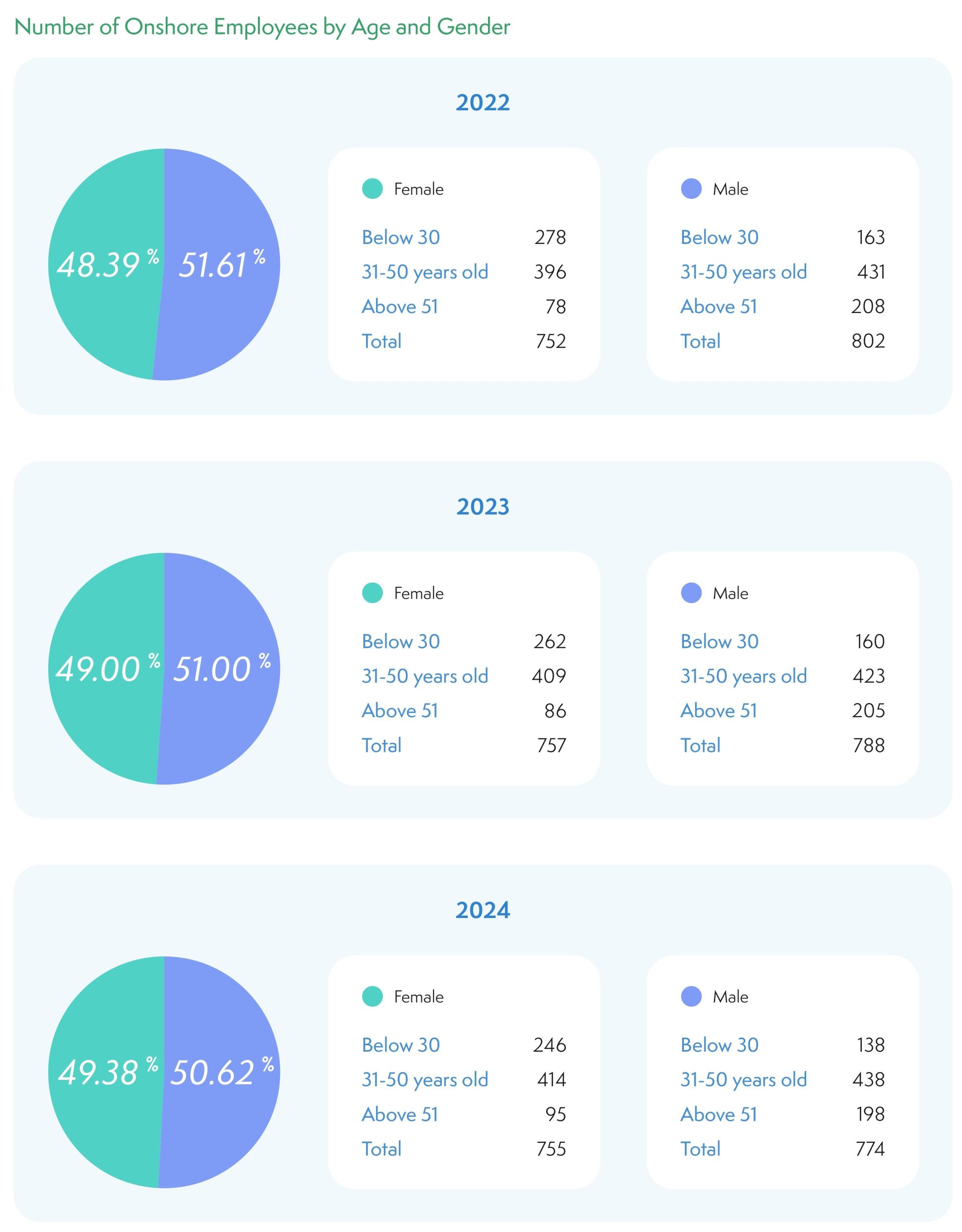
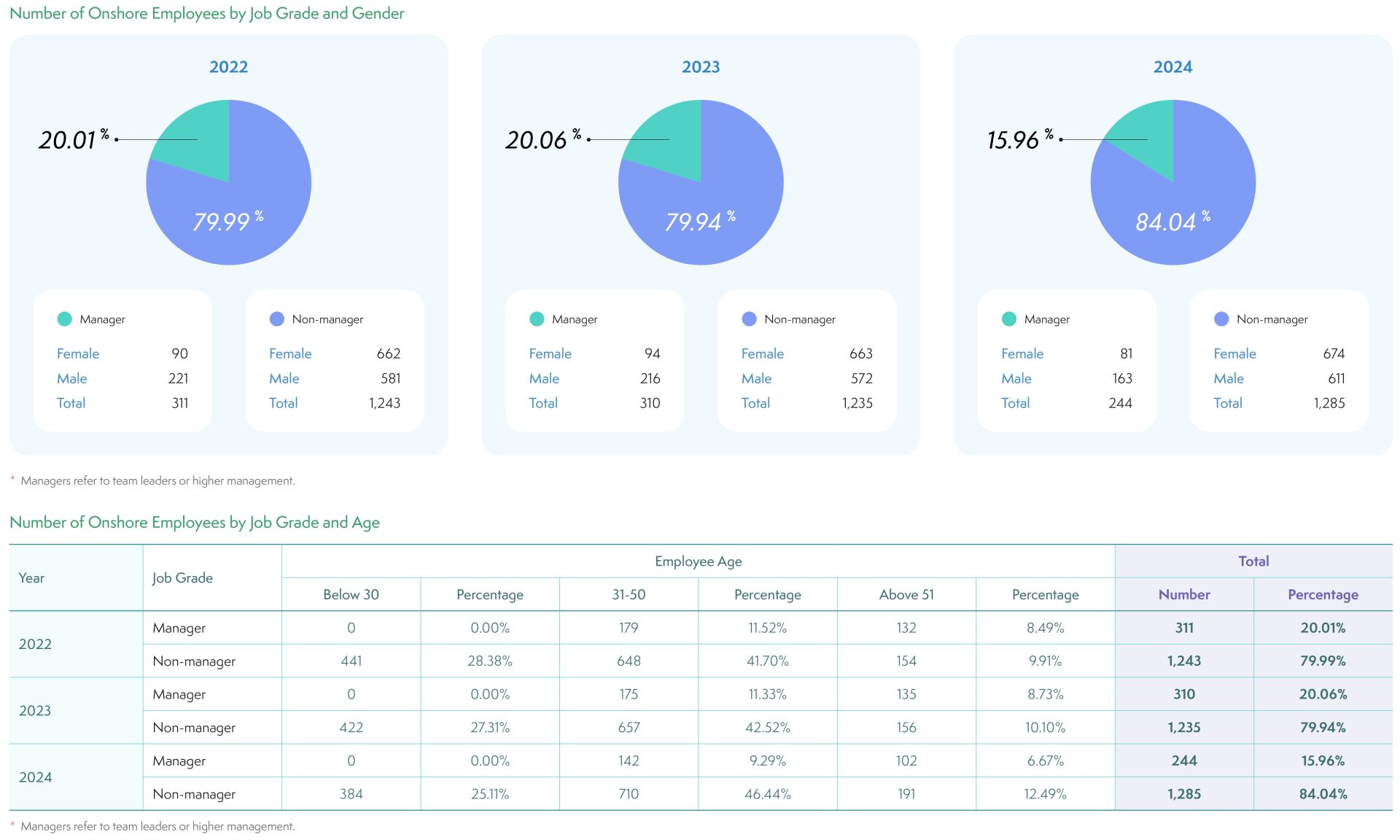
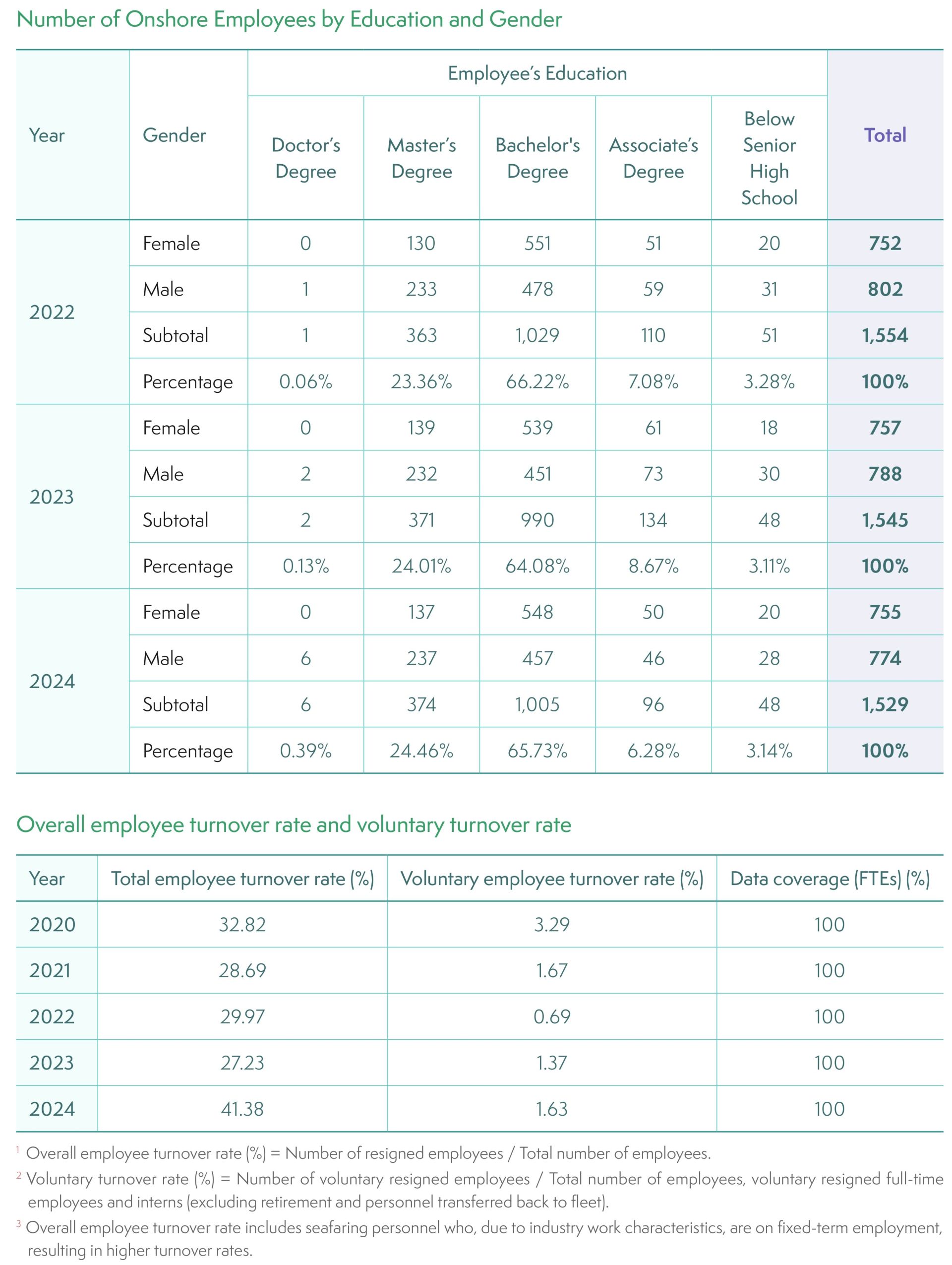
| Total number of onshore employees | 1,554 | 1,545 | 1,529 |
| Total number of seafarers | 1,632 | 1,812 | 1,837 |
| Total | 3,186 | 3,357 | 3,366 |
Overview of the Employment of Onshore Manpower
Number of Diverse Onshore Employees Employed
| Statistics for Taiwan | Number of Employees with Disabilities | Number of Foreign(Non-Taiwanese)Employees | Number of Minority Employees(Indigenous People) |
|---|---|---|---|
| 2022 | 18 | 1 | 12 |
| 2023 | 19 | 1 | 15 |
| 2024 | 18 | 1 | 11 |
*Foreign employees: Currently employs one employee of Hong Kong nationality.
*Indigenous peoples: Based on actual numbers provided by Indigenous Peoples Commission annual settlement, 2022 data adjusted according to 2024 settlement actual numbers, 2024 data uses 2023 actual monthly average employment estimates, actual numbers to be adjusted in 2025 settlement.
Overview of the Employment of Seafarer Manpower


Number of Onshore Employees and Seafarers by Nationality
| Year | Taiwan | Other | Total |
| 2022 | 2,424 | 762 | 3,186 |
| 2023 | 2,443 | 914 | 3,357 |
| 2024 | 2,485 | 881 | 3,366 |
Diverse Seafarers Employed
| Statistics for Taiwan | Number of Employees with Disabilities | Number of Foreign Employees (Non-Taiwanese) |
|---|---|---|
| 2022 | 2 | 1,408 |
| 2023 | 1 | 913 |
| 2024 | 1 | 880 |
Propotion of Senior Management Hired from the Local Community in Taiwan
| Number of Senior Management Officers Who Are Locals | 2022 | 2023 | 2024 |
| 10 people | 11 people | 8 people | |
| 100% | 100% | 100% |
Talent Cultivation
Seafarer Safety Management
To protect the work environment of seafarer on ships, all vessels in the fleet currently pass regular audits by flag states and classification societies, while also obtaining International Safety Management Code (ISM Code) and Maritime Labour Convention (MLC) certificates. For risks faced by shipboard work such as variable climate and medical inconvenience, relevant management policies and measures are formulated to ensure personnel safety, vessel safety, and cargo safety. Through shipboard auditing, supervision, and vessel boarding visit mechanisms, and systematic implementation of management records and tracking, dual supervision of personnel performance and vessel maintenance is achieved, improving overall vessel operation and navigation safety.
Seafarers training is also an important part of the Company's maritime safety improvement. In addition to enhancing competencies, we require all crew members to receive pre-duty occupational safety training before boarding, including: maritime case explanations, company ISM policies, latest convention legal requirements, occupational safety awareness, etc., and provide personal protective equipment to prevent accidents. We also regularly send occupational safety and health communications, introducing seafarer occupational safety and health concepts at all levels. To meet modern environmental demands, seafarer training also strengthens courses on vessel clean energy and compliance with environmental regulations of various countries.
All vessel operations undergo risk assessment, with the Marine Department and fleet regularly holding safety management review meetings and vessel safety meetings, establishing standard operations according to vessel safety management systems with zero industrial safety accidents as the goal. Through training, we actively promote emergency evacuation procedures when danger occurs and urge crew members to report to direct supervisors according to procedures. The Company regularly implements various drills to enhance seafarer response capabilities, ensuring that when emergency incidents occur, shore management units and seafarers can communicate effectively and take appropriate emergency response measures.
Seafarers training is also an important part of the Company's maritime safety improvement. In addition to enhancing competencies, we require all crew members to receive pre-duty occupational safety training before boarding, including: maritime case explanations, company ISM policies, latest convention legal requirements, occupational safety awareness, etc., and provide personal protective equipment to prevent accidents. We also regularly send occupational safety and health communications, introducing seafarer occupational safety and health concepts at all levels. To meet modern environmental demands, seafarer training also strengthens courses on vessel clean energy and compliance with environmental regulations of various countries.
All vessel operations undergo risk assessment, with the Marine Department and fleet regularly holding safety management review meetings and vessel safety meetings, establishing standard operations according to vessel safety management systems with zero industrial safety accidents as the goal. Through training, we actively promote emergency evacuation procedures when danger occurs and urge crew members to report to direct supervisors according to procedures. The Company regularly implements various drills to enhance seafarer response capabilities, ensuring that when emergency incidents occur, shore management units and seafarers can communicate effectively and take appropriate emergency response measures.
International Talent
To implement comprehensive talent cultivation policies, the Company encourages employees to gain cross-departmental work experience after two to three years of capability in the same position, even challenging overseas work to develop comprehensive talents. In 2024, the Company continued promoting employee rotation systems, viewing this as key to company talent development, and provided a total of 23 shipboard training opportunities to expand employees’ understanding of the industry chain and operational sites. In the future, overseas training programs and other initiatives will continue to be promoted, assigning promising employees to overseas regional centers for training or apprenticeships to enhance employees' international perspectives.
Employee Rotation
| Year | Departmental Rotation | Group Rotation | Onshore/Offshore Rotation |
| 2022 | 39 | 148 | 32 |
| 2023 | 44 | 160 | 30 |
| 2024 | 34 | 158 | 27 |
Training Hours
Onshore Employees' Average Training Hours per Year
| Gender | Number of Employees | Total Training Hours | Average Training Hours | |||
| Manager | Non-manager | Manager | Non-manager | Manager | Non-manager | |
| Female | 91 | 700 | 2,562.4 | 17,878.6 | 28.2 | 25.5 |
| Male | 232 | 597 | 5,953.4 | 13,749.7 | 25.7 | 23.0 |
| Total | 1,620 | 40,144.0 | 24.8 | |||
Training for Improving the Compentency of Onshore Employees in 2024
| Course Type | Total Trainees | Total Training Hours | Investment Amount(NTD) |
|---|---|---|---|
| Dissemination courses | 20,067 | 9,156.5 | 0 |
| Professional industry-related courses | 3,237 | 5,240.6 | 212,000 |
| Labor safety and health courses | 1,448 | 3,895.0 | 83,440 |
| Orientation | 244 | 1,881.1 | 11,699 |
| Computer courses | 9 | 103.0 | 34,035 |
| Management skill courses | 270 | 2,117.0 | 2,199,386 |
| Job development courses | 6,261 | 14,010.0 | 2,610,851 |
| External training courses | 201 | 3,071.0 | 2,575,283 |
| Total | 31,737 | 39,484.2 | 7,726,694 |
☑️Average training investment per onshore training participant: NT$4,770
2024 Seafaring Employee Skills Enhancement Training Implementation Status
| Course Type | Totla Trainees | Total Training Hours | Investment Amount (NTD) |
|---|---|---|---|
| Orientation training | 1,170 | 5,751 | 5,177,492 |
| Competency improvement training | 1,193 | 26,886 | 18,115,818 |
| Ship operation training | 152 | 1,344 | 1,457,150 |
| Labor safety and health training | 1,090 | 3,270 | 0 |
| External labor safety and health training | 44 | 924 | 198,000 |
| Total | 3,649 | 38,175 | 24,948,460 |